
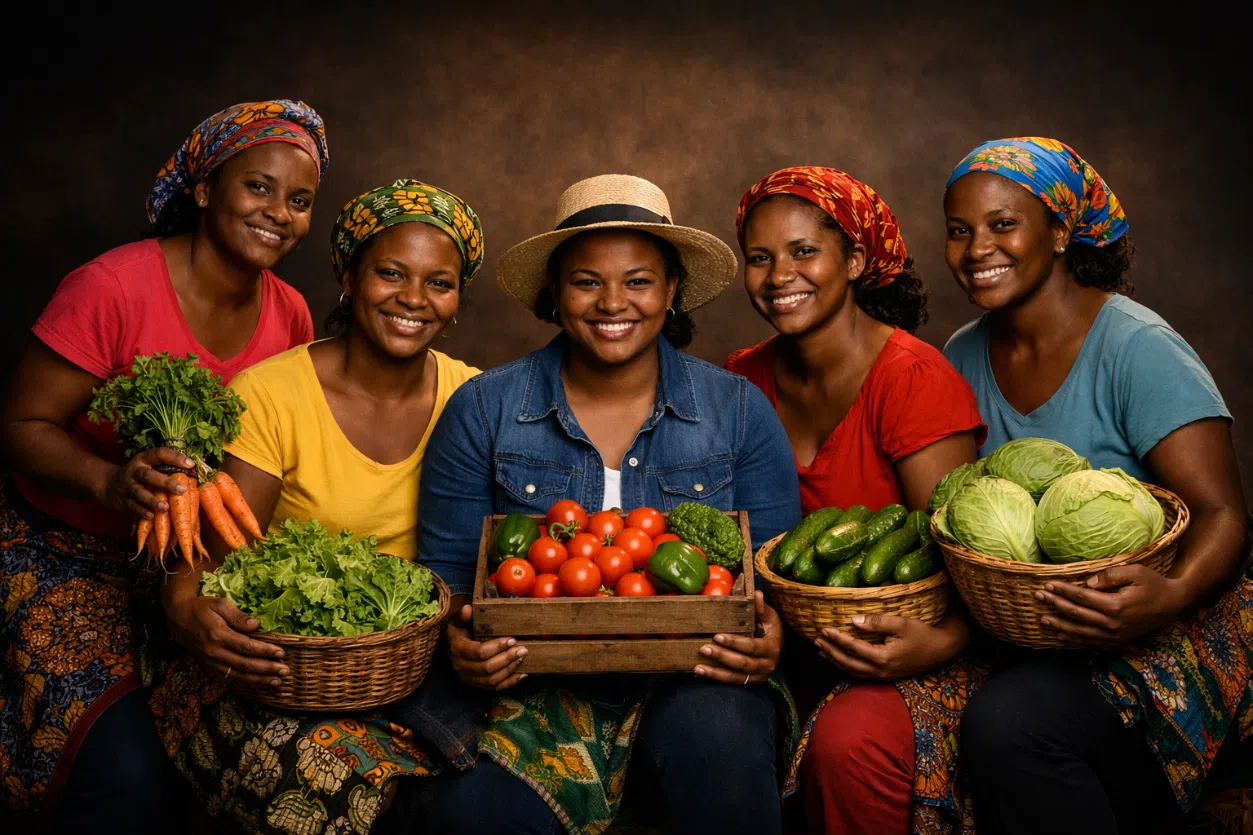
In the heart of Dondo, a rural district surrounded by fertile land and resilient people, a group of women decided to change their destiny. For years, they had worked tirelessly in small farms, selling vegetables at local markets for barely enough to survive. Their days were long, their earnings uncertain, and their dreams often postponed. But everything began to shift when they joined our training program on sustainable agriculture and cooperative management.
The program was simple in design but powerful in impact. It taught them how to plan production cycles, manage finances, and work collectively. For many, it was the first time they had ever written a business plan or calculated profit margins. They learned that farming could be more than survival, it could be a pathway to independence.
Among them was Maria, a mother of three who had always dreamed of sending her children to school without worrying about the next meal. She listened attentively during every session, taking notes and asking questions. When the training ended, she gathered five other women and proposed forming a cooperative. They called it “Raízes de Esperança” (Roots of Hope).
With guidance and a small microloan, the cooperative began cultivating vegetables and fruits using sustainable methods. They introduced crop rotation, organic fertilizers, and efficient irrigation systems. The results were astonishing. Within months, their yields doubled, and their produce attracted attention from local markets and restaurants.
The first time Maria received her share of the profits, she cried. Not out of sadness, but out of relief. For the first time, she could pay school fees, buy uniforms, and still have money left to reinvest. The cooperative became more than a business, it became a symbol of empowerment.
Word spread quickly. Other women from neighboring villages came to learn from them. The cooperative opened its doors to train new members, teaching them not only how to farm but how to lead. They held weekly meetings to discuss progress, challenges, and ideas. Each woman had a voice, and every decision was made collectively.
The impact rippled through the community. Families began eating healthier, children attended school regularly, and the local market flourished with fresh produce. The cooperative also started a small savings fund, allowing members to access emergency loans or invest in personal projects.
Maria’s story became a beacon of possibility. She often says, “We used to think we were just farmers. Now we know we are entrepreneurs.” That mindset shift is the true victory. It’s the moment when dependency turns into ownership, when fear transforms into confidence.
The cooperative now supports over 30 families, and its success has attracted partnerships with local NGOs and agricultural institutions. They are exploring new ventures, processing dried fruits, producing natural juices, and packaging organic products for regional distribution.
But beyond the numbers and profits lies something deeper: dignity. These women have reclaimed their power. They walk taller, speak louder, and dream bigger. They have proven that when women are given knowledge and opportunity, they don’t just change their own lives, they change entire communities.
Their journey triggers powerful emotions. The sense of belonging, knowing they are part of something bigger. The feeling of achievement, seeing tangible results from their hard work. The hope for the future, realizing that their children will inherit not struggle, but strength.
This story is a testament to the transformative power of collective action. It shows that empowerment is not charity; it is investment. When women are equipped with tools, training, and trust, they become unstoppable forces of progress.
The cooperative’s next goal is to expand its reach, mentoring other women across Sofala Province. They envision a network of female-led cooperatives, each one a seed of change planted in Mozambican soil.
Maria and her team are not waiting for help, they are building it. They are redefining what success looks like in rural Mozambique: not skyscrapers or big corporations, but communities thriving through collaboration and purpose.
Their story reminds us that hope grows best when nurtured by hands that refuse to give up. And in those hands, Mozambique’s future is already taking root.