
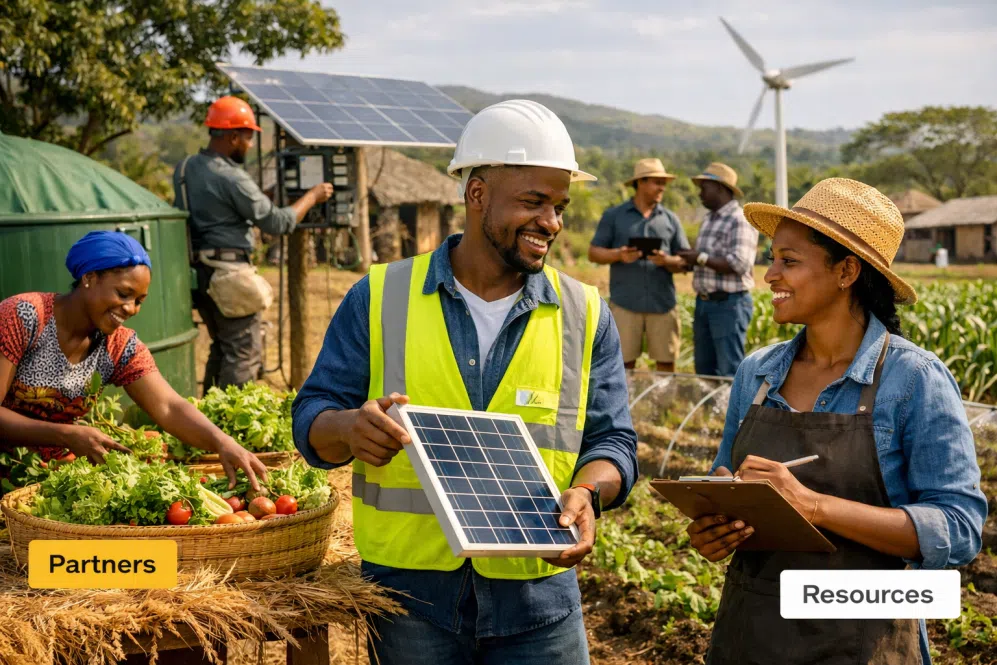
Mozambique is a country of contrasts, abundant natural resources, vibrant culture, and a youthful population full of potential, yet still facing deep economic challenges. Amid these realities, social entrepreneurship emerges as a powerful engine for sustainable economic growth. It’s not just about creating businesses; it’s about building livelihoods, fostering inclusion, and ensuring that prosperity reaches every corner of society.
A New Kind of Growth
Traditional economic models often focus on profit first, leaving social impact as an afterthought. Social entrepreneurship flips that logic. It starts with purpose, solving real problems, and builds profit around that mission. In Mozambique, this approach is transforming how communities think about business.
Imagine a small enterprise in Nampula that produces eco-friendly building materials using local resources. It employs young people, reduces waste, and provides affordable housing solutions. The profits stay within the community, circulating through local markets and families. This is growth that doesn’t just expand the economy — it strengthens its roots.
Creating Jobs and Opportunities
Unemployment, especially among youth, remains one of Mozambique’s biggest challenges. Social enterprises are changing that by creating jobs that matter. They train people not only to work but to lead, to innovate, and to see themselves as part of a larger mission.
A social venture in Maputo, for example, might train young developers to build digital tools for local businesses. Another in Tete could empower women to run solar-powered microgrids, bringing electricity to remote villages. Each job created is more than income — it’s empowerment, skill-building, and hope.
When people work for a purpose, productivity rises, creativity flourishes, and communities thrive.
Financial Inclusion and Local Investment
Access to finance is often limited in rural Mozambique. Social entrepreneurs are bridging that gap through microfinance, cooperative models, and community investment funds. These initiatives allow farmers, artisans, and small traders to access capital, grow their businesses, and reinvest locally.
Consider a cooperative in Sofala that pools resources from local farmers to buy equipment and seeds. With shared ownership, profits are distributed fairly, and members gain financial independence. This kind of inclusion builds resilience — when one succeeds, the whole community benefits.
Financial inclusion also means trust. When people see transparent, community-driven systems, they participate more actively in the economy. It’s a cycle of empowerment that fuels sustainable growth.
Sustainability as a Business Principle
Mozambique’s economy depends heavily on agriculture, fisheries, and natural resources, sectors vulnerable to climate change. Social entrepreneurship introduces sustainability as a core business principle, not a side project.
A social enterprise in Inhambane might focus on sustainable fishing practices, ensuring marine life preservation while increasing fishermen’s income. Another in Zambézia could promote organic farming, reducing chemical use and improving soil health. These ventures prove that environmental responsibility and economic success can coexist.
Sustainability ensures that growth today doesn’t compromise tomorrow. It’s about creating value that lasts, for people, for nature, and for the economy.
Building Ecosystems of Collaboration
No entrepreneur succeeds alone. Social entrepreneurship thrives on collaboration, between communities, investors, NGOs, and governments. In Mozambique, partnerships are forming across sectors to support innovation and scale impact.
Organizations like BAM360 International are building ecosystems where entrepreneurs access mentorship, funding, and global networks. These collaborations amplify local voices and connect Mozambican ventures to international markets.
When collaboration becomes culture, growth becomes unstoppable.
The Human Side of Economic Growth
At its core, sustainable economic growth is about people. It’s about the mother who can now afford school fees because her cooperative is thriving. The young graduate who finds purpose in a social startup. The farmer who no longer fears drought because he has access to new technology.
Social entrepreneurship humanizes economics. It reminds us that numbers on a chart represent lives changed, families supported, and futures built.
A Vision for Mozambique’s Future
Mozambique’s path to prosperity lies not in imitation but in innovation, in creating models that reflect its people’s values and realities. Social entrepreneurship offers that path. It builds an economy that is inclusive, resilient, and sustainable.
Every venture launched, every community empowered, every partnership formed contributes to a mosaic of progress. Together, they form a vision of Mozambique where growth is not measured only by GDP but by human progress.